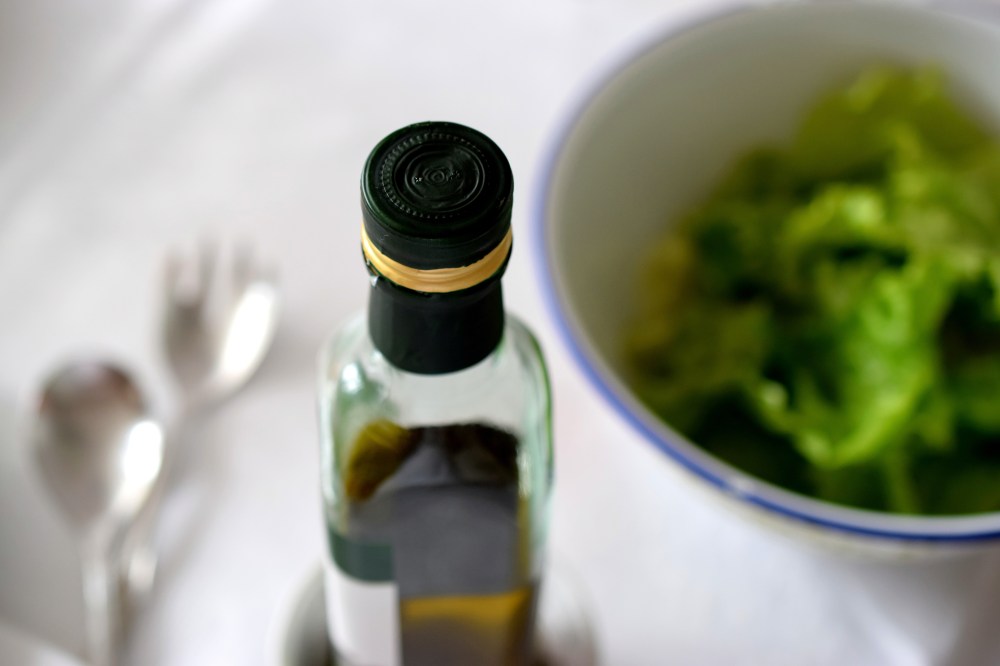
What oil should I use for cooking? Seems like a simple question. But the answer is not so straight forward. As moms, we want to do what is best for the kids and the family. But there are so many different recommendations from the doctor, our family and friends. So how do we make the right choice?
For past few decades it has been recommended not to use oils that are rich in saturated fat. It was believed that saturated fat was the culprit in causing heart diseases. The food industry came up with alternatives like canola oil, vegetable oil, margarine instead of butter and many more to replace the oils in our diet. As one would expect removing saturated fats from the diet would make us healthy. But the number of heart diseases, diabetics and other chronic conditions were still on the rise. Why did switching to a supposedly healthy oils not give a healthy life style? A good question to research on.
Recently some health advocates has been recommending only to use saturated fat for cooking. Should I just trust them. Why this shift?
My first instinct is to always trust what is traditionally used. Instead of just taking it for granted, i wanted to do my own research on this topic and understand which oils do good for the body.
What is oxidative stress?
Before I delve into details of determining which oils are good and bad, i will have to explain oxidative stress. Some of you might be familiar with this but for those who are not, read on.
The human body is made up of millions of cells. Each cell has protons, neutrons and electrons. Protons are positively charged and together with neutrons make the central nucleus. The negatively charged electrons are revolving around the nucleus. In a healthy cell there are equal number of proton and electrons. This cell is in perfect harmony. Let us call this our ‘Healthy Happy Cell’.
Assume that some external change is causing our ‘Healthy Happy Cell’ to lose an electron. After losing an electron the cell is unstable. This unstable cell is actively looking for an extra electron to stabilize itself. When there are numerous cell in the body that have this imbalance then the body is in constant lookout for more electron and might even pull some electron from neighboring cell. More electrons a cell loses, more unstable the cell becomes. Increase in the number of unstable cells leads the body to state called oxidative stress which causes inflammation and also becomes a ground for any diseases to take roots. You are probably thinking what oxidative stress has to do with cooking oil. I will get to that shortly.
Different type of oil:
There are three types of oil. Saturated, mono-unsaturated and poly-unsaturated. Can we dive into some chemistry?
Saturated fatty acids have a molecular structure that does not contain double bonds between carbon atoms. All carbon atoms are connected by stable single bond which are not easily affected by external factors like heat, light and air; these oil do not go rancid quickly. The perfect nature of these molecule makes them tightly aligned and stays solid at room temperature. Some saturated oil are coconut oil, palm oil, butter, ghee and lard.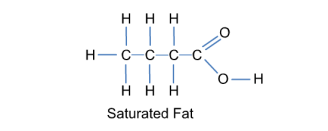
Mono-unsaturated fatty acids have one double bond in their molecular structure. These oils are liquid at room temperature but changes to solid state in cooler temperature. Olive oil contains mono-unsaturated fats which are stable at room temperature but not very stable when heated.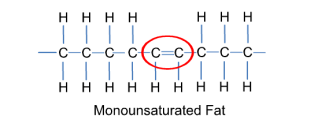
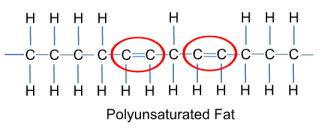
Poly-unsaturated fatty acid have two or more double bonds between their carbon atoms. These oils are liquid at room temperature and in cooler temperatures. These fatty acids are very unstable and can go rancid when reacting with external factors like heat, light and air. Poly-unsaturated fatty acid are found in vegetable oil, canola oil, corn oil, soy bean oil, sunflower oil, safflower oil etc.
So what is the deal?
Now that we know the molecular structure of the different types of oil, let us see why some oils are good and some are bad. The double bonds in poly-unsaturated fatty acid contains highly reactive hydrogen atoms that will react when exposed to light, heat or air. This reaction creates compound called lipid radical, which reacts with oxygen to create lipid peroxide radicals. Radicals? yes,these are the free radicals that are actively looking for electrons.
Cause oxidative stress: Imagine the same process when poly-unsaturated fatty acid is consumed. Our digestive tract causes these oils to create lipid radicals and later into lipid peroxyl radical.This lipid peroxyl radical starts to steal electrons from our healthy-happy cell. Now, our ‘healthy-happy’ cell is in panic mode looking for an electron to heal itself. The more poly-unsaturated fat is consumed, more cells are in panic mode. More cells in panic mode leads to oxidative stress. This inflames cells, tissues, even the entire organ. Inflammation in the arteries could cause increase blood pressure. Inflammation in the digestive tract can hinder nutrient and mineral absorption.
Here is a publication stating peroxyl radical to be mutagenic and carcinogenic. [3]
"Malondialdehyde is a naturally occurring product of lipid peroxidation and
 prostaglandin biosynthesis that is mutagenic and carcinogenic."
Heavily processed: Poly-unsaturated oil go through a lot of chemical processing to get to the final product. Here are some of the processes involved: solvent extraction (with petroleum derived products), hydrogenation (for making margarine), deodorization(to remove odor) and later stabilization (for longer shelf life). Each process either add a chemical load or a molecular structure change to the oil.
GMO Source : Poly-unsaturated oils are mainly obtained from GMO source. The problems involved with GMO foods needs a blog post all on it own. Just to give one example of the side effects of GMO crops. Glyphosate is a widely used herbicide on GMO crops. While weeds dies from glyphosate, the GMO crop can withstand it. Plant eventually absorbs the glyphosate and gets it into our food. Glyphosate is know to cause birth defects, alzheimer, cancer and inflammation [1],[2]. Glyphosate is also the known culprit for the increase in gluten allergy in the recent decades. Anyways, the source for soybean oil, corn oil, vegetable oil etc are from GMO crops which are known to be highly sprayed with pesticides.
Omega-6 and Omega-3 ratio : Human beings evolved with 1:1 omega-6 to omega-3 fatty acid ratio in the diet. Over consumption of poly-unsaturated fat, which are high in omega 6 fatty acid has changed the ratio of our modern diet drastically to 15:1. Increase in this ratio has direct effect of occurrence of chronic diseases and inflammation.[4]
What is best to use:
Choose saturated fats that are from minimally processed organic sources. Using saturated fat in cooking not only avoids oxidative stress but also has many health benefits. Here’s a the list of oils that I use for cooking.
Coconut oil : Coconut oil do not oxidize at high temperature and is ideal for deep frying. Great for everyday cooking and a good substitute for baking. High content of lauric acid helps digestion as coconut oil does not require bile for digestion. Do you know that breast milk contains high amount of lauric acid? This is the reason why infants can easily digest breast milk. Coconut oil directly goes to the liver and helps to produce energy which greatly improves metabolism. (Tips: Try 1 teaspoon of coconut oil in the morning to greatly improve metabolism. It also doubles as energy booster without the caffeine.) I use organic cold-pressed virgin coconut oil. I also like to use coconut oil that is produced by traditional methods from sun dried coconut and later expelled pressed with no additives.
Ghee: Shelf stable and is great for deep frying as it do not oxidize at high temperature. Ghee has high contents of butyric acid also know as butyrate. Butyric acid is also produced by the good gut bacteria that helps in digestion. Adding ghee to the diet improves digestion and reduce inflammation. Butyrate is know to contribute to energy production in cell. Buy ghee from organic and grass-fed sources. I make ghee at home from whole foods 365 organic unsalted butter (not from grass-fed milk). I have tried organic valley ghee which is from grass-fed cows but i still prefer the flavor and aroma of the homemade ghee from organic butter. I still have to try making ghee from Straus butter available in California, this is on the expensive side.
Butter: Butter has the same benefits as ghee, as it contains buytrate. It is great for baking, making toast and searing fish. I buy 365 organic butter or Straus.
Olive oil : Olive oil, rich in oleic acid is know for its health benefits and is loaded with anti-oxidants. Best to use for salad dressing and low heat cooking. When buying olive oil, make sure it is not adulterated. Usually, olive oil is mixed with other oils to be sold in the US. There are great local brands of olive oil that are aromatic and pure. For now, I am using the 365 brand olive oil which is reasonably priced.
Sesame oil : has about 14% saturated fat. And has equal amounts of monounsaturated and polyunsaturated fats. This oil is an exception as I love the taste and smell. I use sesame oil when making dosa, saute onions for curry base or saute bitter guard. I am still using the oil from the Indian store. Here is one organic source that I want to try.
Problem areas to avoid:
In some cases it is hard to avoid poly-unsaturated fat, especially in processed food like cookies, crackers and chips. Though I avoid most processed food, it is hard to get the kids to understand the problems with our food industry. Even the supposedly healthy snack in health food store make their cookies, crackers and chips with sunflower or safflower oil. It is at-least expelled pressed so there is no additives and no chemical processing involved.
My solution is to make homemade treats whenever possible. For the ones that I can’t make at home, I try to buy snacks that are made from saturated fat and are from non-GMO and organic sources.
What oils do you use for cooking? Did this post help you make a better decision? Please share you thoughts.
References :
- http://www.centerforfoodsafety.org/files/glyphosate-faq_64013.pdf
- http://www.ncbi.nlm.nih.gov/pubmed/23756170
- http://www.ncbi.nlm.nih.gov/pubmed?list_uids=10064852&cmd=Retrieve&indexed=google
- http://www.ncbi.nlm.nih.gov/pubmed/12442909
 Natural Care by mom
Ghee and coconut oil everyday. Sesame oil for certain dishes. Saffola for deep frying.
LikeLike
Very well written and very informative!
I use coconut oil, Olive oil, Ghee everyday, sesame oil for certain dishes and canola oil for deep frying.
LikeLike
Good one.Thanks for sharing …I use home made ghee and olive oil.Have to try coconut oil though.Saffola for deep fry(it says low saturated fat)
LikeLike